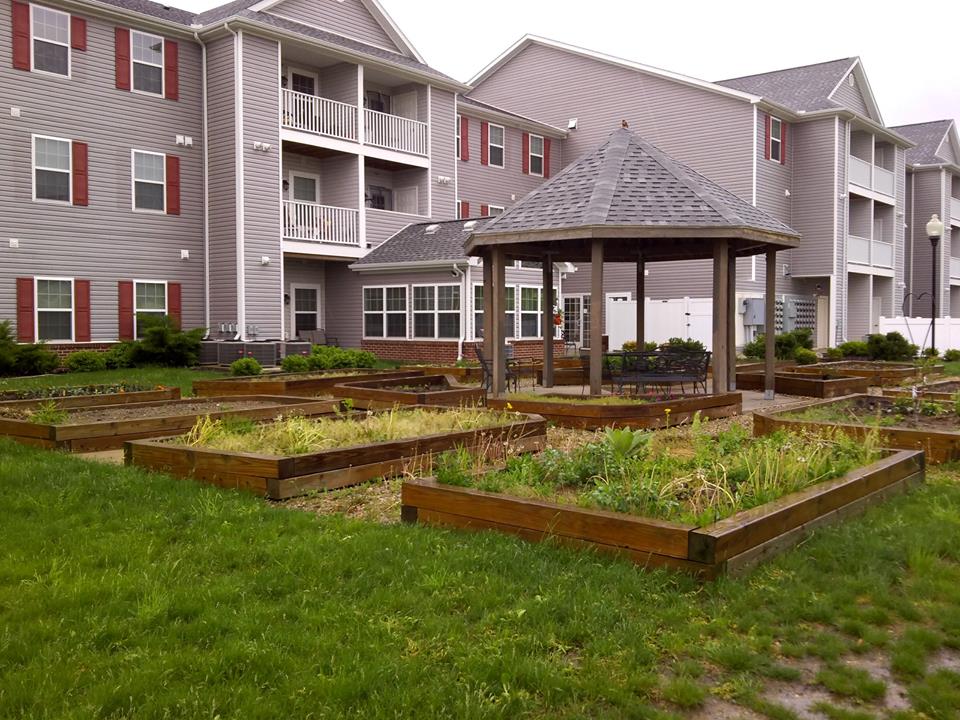
In a press release from the Woda Group, the development company advised that they have plans to construct a 68-unit affordable housing development on the western shore of the Grand River. The project will be called Grand View Place. There will be a primary building that houses 64 of the units, which will stand four stories tall and is being referred to as a “pavilion building.” There will also be four city-front townhomes. Of the 68 units, 7 are designed to be barrier-free.
Their plans for development of this space have netted them a massive $1.2 million in Low-Income Housing Tax Credit (LIHTC) from the Michigan State Housing Development Authority. That means that state funds will be used to help build this property and ensure that it remains affordable for the low income families and Grand Rapids locals it was originally designed to serve. The LIHTC is renewable annually, meaning as much as ten times the slated $1.2 million could be invested in the construction of Grand View Place and improvement in the local community.
The central location of Grand View Place will put large swaths of Grand Rapids within walking or biking distance for tenants at the building, including the rapidly developing Medical Mile, the Leonard corridor, and downtown Grand Rapids. In order to support foot traffic to the west of the development, Woda Group has earmarked $25,000 of the budget for the project to upgrades and investments in the pedestrian tunnel under US 131, ensuring that all residents of the area will benefit from this project.
Throughout the construction phase of this project, there will be nearly 100 jobs created in the area, and there will be substantial financial investment from the Woda Group in the project as well. While some may balk at the amount of public funds being used to subsidize the construction of this project, estimates by the National Association of Home Builders indicate that these tax credits have created over 13,000 jobs in Michigan between 2011 and 2014 and resulted in the investment of over $105 million in various real estate development projects across the state.
This development and the potential impact on low-income families, the disabled, and the elderly is substantial. At a time where real estate purchase and rental prices are increasing in the area, this will ensure that those on a fixed income and the working poor still have access to central, high-quality housing in the city of Grand Rapids. While the development of downtown and the Medical Mile have brought many deep-pocketed investors into the area, most are targeting well-paid professionals and businesses with their projects.
Sadly, much of the business envelopment primarily produces service-industry jobs, such as food service, and these jobs do not pay wages that allow people to support themselves in many cases. Subsidized housing projects such as Grand View Place help ensure that those who labor in these low-paying, high-demand jobs will still have the option of living close to the area where they work, instead of being forced to commute long distances to a low-paying job. Developments such as these help keep our city clean, safe, and worker-friendly.