
Last week we explored just a few of the potential benefits of having trees on your residential property. From adding seasonal beauty to reducing energy costs during the hot summer months to even increasing the sale price of your home, fully grown and mature trees can offer homeowners quite a few benefits in addition to their supplying clean air. There are some potential drawbacks to trees, however, that should be explored if you are considering a property with trees or are looking to plant trees in the near future.
Trees Can Be Pretty Messy
One of the biggest complaint of homeowners who have properties with trees on them is the amount of work and care it takes to maintain a clean yard when you have certain kinds of trees. Deciduous trees drop their leaves every fall (although some species, including certain kinds of oak trees, will hold their dead leaves all winter and drop them in the spring). That can leave a huge mess for homeowners. They either have to rake up and dispose of all those leaves or hire someone else to do it. For fruiting trees like apples or crab apples, and flowering trees like the Northern Catalpa or the Magnolia tree, those fruits and flowers will also drop, requiring additional cleaning and work in the yard.
Trees Can Cause Issues With Neighbors
If you have a tree close to the property line, its location can be a real issue. If your neighbor doesn't like the shade it provides, or the incursion of roots under their land, or the leaves it drops in the fall, you could being butting heads with your neighbor. They may want to trim the tree. They could go so far as to ask you to remove it or trim it back. In most cases, you aren't required to pay for the tree's trimming, but your neighbor does have the legal right to have the branches that overhang their property trimmed back to your property line. This can lead to tension, even lawsuits if the trimming was poorly performed and damages or kills the tree.
Trees Can Damage Your Home
Sometimes, if there is a strong wind storm or the tree itself has been compromised by age, insects, or disease. Big branches can come down, damaging your roof. The whole tree could be uprooted if it's been compromised before a storm, falling onto your home, garage, or vehicle with expensive results. Of course, this risk can be minimized by performing regular assessments of your trees' health and ensuring that dead branches are trimmed once they are noticed. Thankfully, except in the cases where it's glaringly obvious that the homeowner failed to perform maintenance, homeowner's insurance will typically cover damage caused by falling trees or branches.
Overall, whether you want trees on your property is a personal decision. They can offer a lot of benefits, but here are potential drawbacks as well.

 Located in the highly coveted Forest Hills Central school district within the Beard Farms subdivision, this home has something many neighboring houses lack: a full-sized, accessible back yard! That yard is not only well-maintained, it is also upgraded thanks to the spacious elevated deck off of the rear of the home. When you're not out enjoying the green grass and trees, you can be admiring them from the comfort of your lovely wooden deck. You can get out to that deck via any number of large, glass sliding doors that not only provide egress onto the deck but also flood the main floor of the home with natural light, despite the treed surroundings.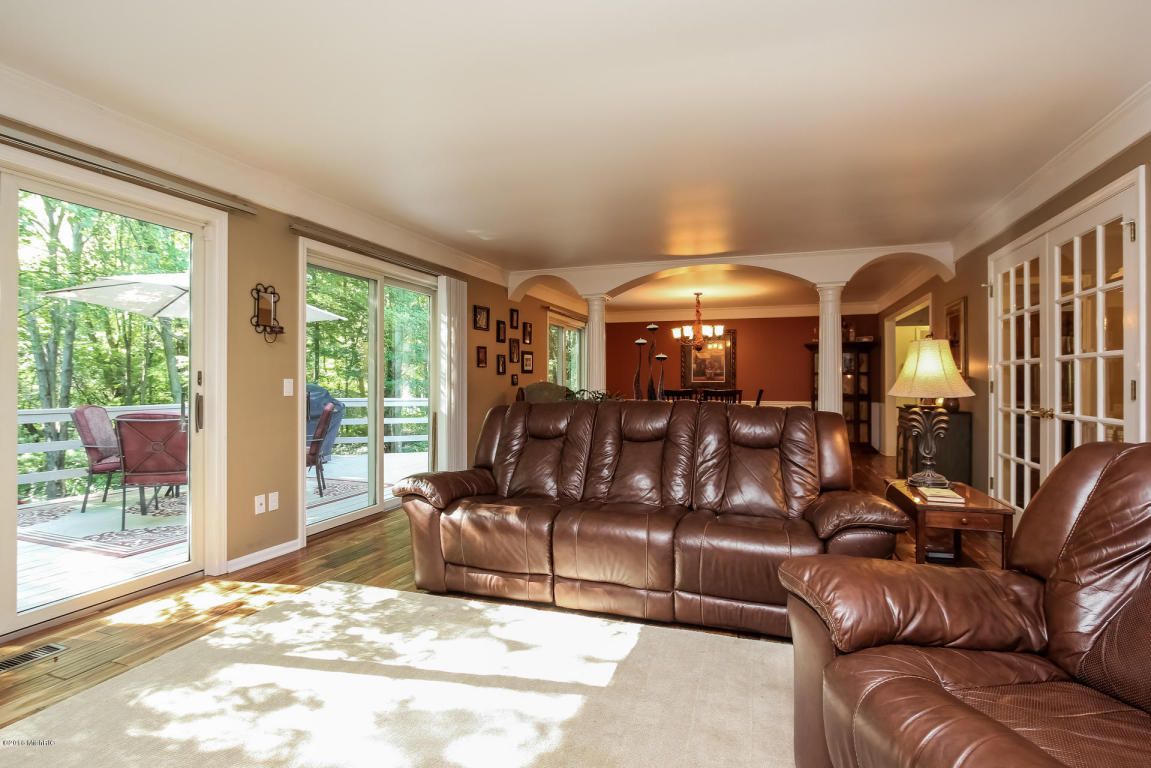
 This home also boasts beautiful brick fireplaces, run by gas, on both the main floor and the lower floor. These brick masterpieces not only two both levels of living space together, they help to make this home a truly standout, one-of-a-kind living space.


